

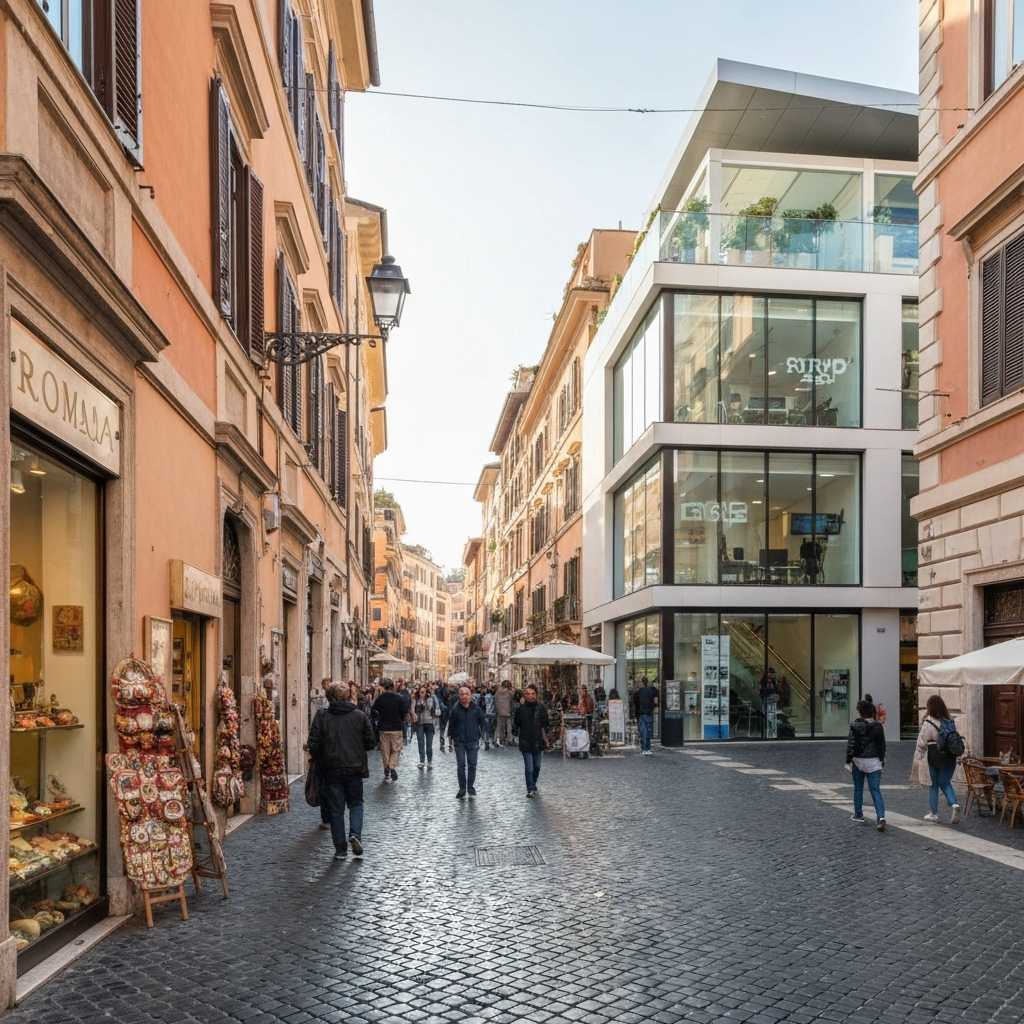
Rome’s business environment is undergoing significant transformations, marked by the decline of traditional retail and the emergence of innovative entrepreneurial initiatives.
Decline of Traditional Retail
Recent data indicates a substantial reduction in traditional retail establishments. Between 2019 and 2025, the city witnessed the closure of approximately 24,000 businesses, a 22.9% decrease. The clothing sector was particularly affected, experiencing a 33% decline over six years. Factors contributing to this downturn include high rental costs, increased online competition, and reduced consumer spending power. Notably, between 2024 and 2025, 1,900 neighborhood shops ceased operations, underscoring the challenges faced by brick-and-mortar stores. [Source: Corriere.it]
Emergence of Entrepreneurial Initiatives
In response to these challenges, Rome has seen a surge in programs aimed at fostering innovation and entrepreneurship. ‘Roma Rigenera Impresa,’ launched by the Assessorato alle Attività Produttive e alle Pari Opportunità di Roma Capitale, focuses on revitalizing areas like Corviale, Tor Bella Monaca, and Santa Maria della Pietà. This initiative offers comprehensive support, including training, legal and financial assistance, and networking opportunities, to aspiring entrepreneurs. [Source: Comune di Roma]
Additionally, the Sapienza Innovation and Entrepreneurship Hub (SIEH) at Sapienza University provides resources to bridge the gap between academic research and market applications. SIEH offers advanced technologies, support for startup development, and promotes social entrepreneurship models. [Source: Sapienza University]
Impact of Infrastructure Developments
Infrastructure projects, such as the expansion of Rome’s metro system, have positively influenced local economies. Studies on the Metro C line reveal a significant increase in economic activities in areas with improved accessibility, highlighting the potential benefits of strategic public transport investments. [Source: arXiv.org]
Conclusion
Rome’s business landscape is at a crossroads, balancing the decline of traditional retail with the rise of innovative entrepreneurial ventures. The city’s commitment to supporting new business models and enhancing infrastructure suggests a proactive approach to fostering a resilient and dynamic economic environment.