

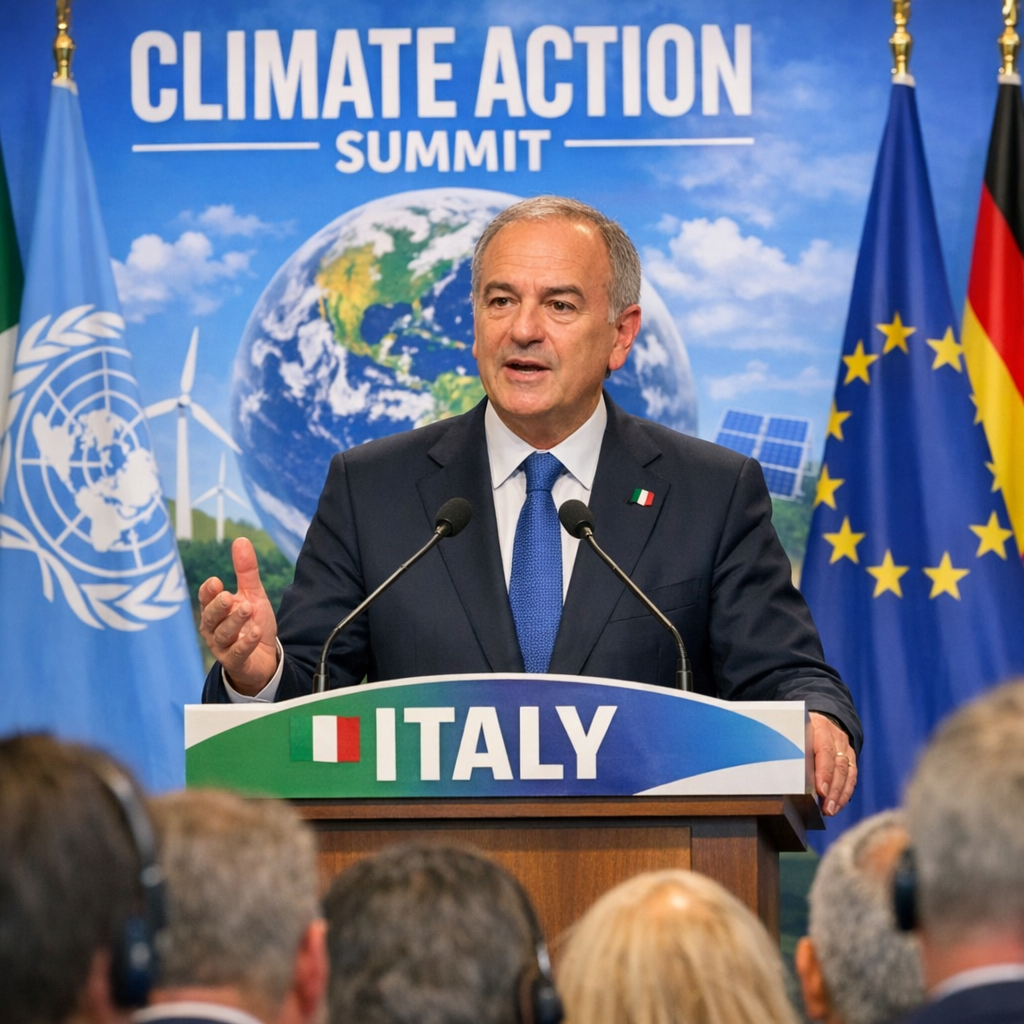
Italy has consistently demonstrated a strong commitment to addressing climate change on the global stage. As a member of the European Union, Italy aligns its policies with EU directives, striving to meet and exceed established climate goals.
National Energy and Climate Plan (NECP)
The NECP serves as Italy’s primary strategic document guiding the nation’s transition towards a sustainable future. Initially adopted in 2019 and updated in 2024, the plan outlines pathways to achieve climate neutrality by 2050. Notably, Italy achieved a net emissions reduction of 34.8% from 2005 to 2023, surpassing the EU average reduction of 30.5% over the same period. However, the plan has faced criticism for lacking an economy-wide target for reducing greenhouse gas emissions by 2030, with some experts deeming it insufficiently ambitious.
Financial Contributions to Climate Action
Italy has significantly increased its financial commitments to support global climate initiatives. In 2024, the country allocated approximately €3.4 billion to climate finance, exceeding the G20 target. This funding comprises €1.67 billion in public resources and €1.77 billion in private funds mobilized through public instruments. Key mechanisms include the Italian Climate Fund and active participation in multilateral funds such as the Green Climate Fund and the Fund for Responding to Loss and Damage.
International Collaboration and Leadership
Italy actively participates in major international climate conferences, including the United Nations Framework Convention on Climate Change (UNFCCC) Conferences of the Parties (COPs). At COP30 in Belém, Brazil, Italy co-promoted the “Belém 4X Pledge on Sustainable Fuels” alongside Japan and India. This initiative aims to quadruple the production of sustainable fuels by 2035, reflecting Italy’s commitment to balancing energy transition with energy security.
Challenges and Future Outlook
Despite these efforts, Italy faces challenges in fully aligning its policies with the Paris Agreement’s objectives. The country’s energy policy remains heavily dependent on fossil fuels, and there is a noted lack of an action plan for phasing out fossil fuel subsidies. Additionally, the NECP’s current targets may fall short of the EU Effort Sharing Regulation requirements, indicating a need for more ambitious and comprehensive strategies.
In conclusion, Italy’s proactive engagement in global climate initiatives underscores its dedication to combating climate change. While significant progress has been made, ongoing efforts are essential to address existing challenges and achieve the nation’s long-term climate goals.