

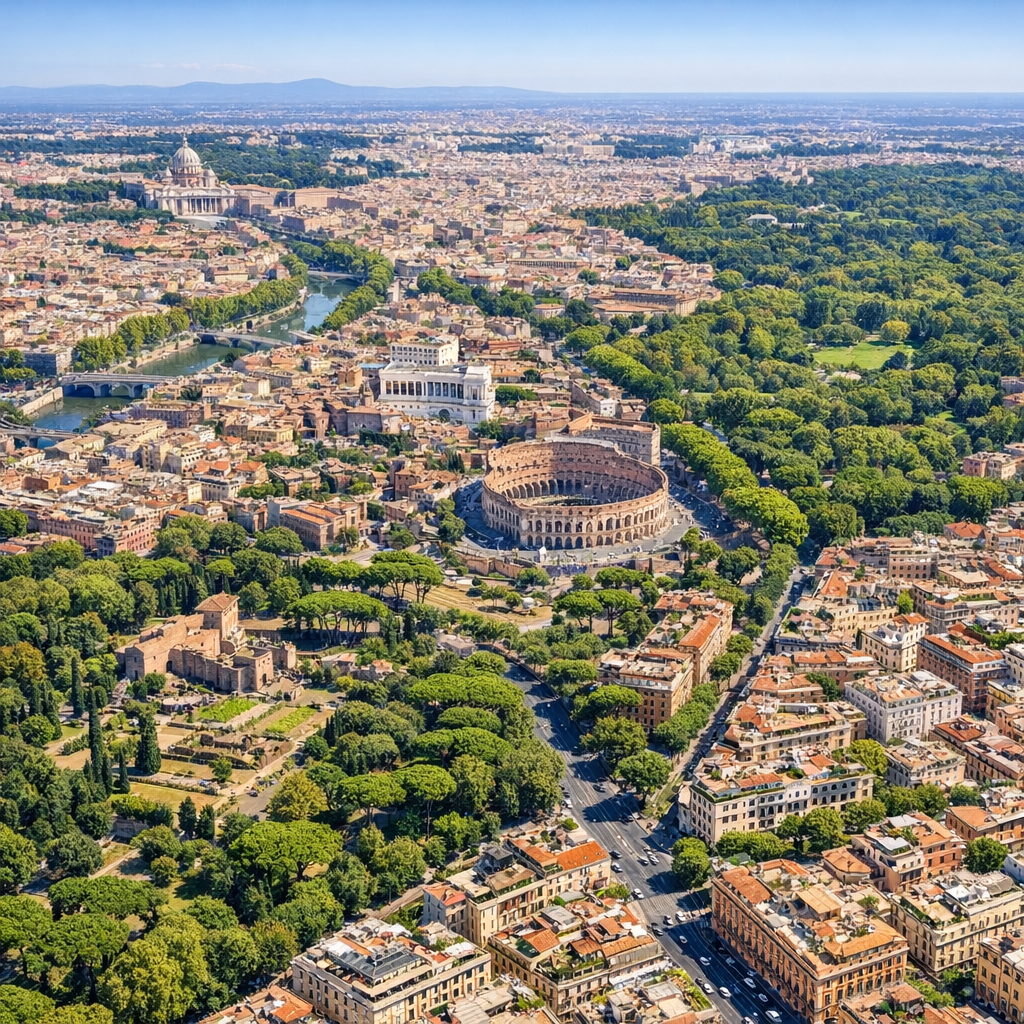
Rome, renowned for its rich history and architectural marvels, faces a modern challenge: the Urban Heat Island (UHI) effect. This phenomenon results in urban areas experiencing higher temperatures than their rural surroundings, primarily due to human activities and urban development.
What is the Urban Heat Island Effect?
The UHI effect occurs when natural landscapes are replaced with dense concentrations of pavement, buildings, and other surfaces that absorb and retain heat. This leads to elevated temperatures in urban areas compared to adjacent rural zones.
Rome’s Rising Temperatures
Recent data indicates a significant temperature increase in Rome. Between 2011 and 2021, the average temperature in the city was 17.7°C, marking a 1.7°C rise compared to the 1981-2010 period. This increase is more pronounced in Rome than in other Italian regional capitals. Additionally, there’s been a rise in the number of summer days (with maximum temperatures exceeding 25°C) and tropical nights (where temperatures don’t drop below 20°C), while frost days have decreased.
Impacts on Energy Consumption
The UHI effect significantly influences building energy demands. Studies have shown that during heatwaves, daily average temperatures in Rome can increase by up to 4.3°C, with the UHI intensity rising by 1.5°C. This leads to a substantial increase in cooling energy requirements for buildings, affecting both energy consumption and indoor thermal comfort.
Mitigation Efforts
To combat the UHI effect, Rome has initiated several projects. One notable initiative is the “Climate Adaptation – The Urban Heat Island Effect in the City of Rome,” funded by the European Commission. This project aims to analyze UHI risks, assess health, economic, and social impacts, and identify targeted solutions in vulnerable areas.
Community Involvement
Residents can play a pivotal role in mitigating the UHI effect. Planting trees, creating green roofs, and using reflective building materials can help reduce heat absorption. Additionally, supporting city initiatives focused on increasing green spaces and sustainable urban planning can make a significant difference.
Understanding and addressing the Urban Heat Island effect is crucial for Rome’s sustainable future. Through combined efforts from authorities and citizens, we can work towards a cooler, more livable city.