

By Lorenzo De Luca
Rome’s weather is no longer just about mild winters and hot summers. Recent studies show lasting shifts in temperature, rainfall, and environmental risk—trends that affect our health, green spaces, and coast. Understanding these changes helps us adapt, prepare, and protect the places we love.
Climate Normals, Revisited
Rome has a hot-summer Mediterranean climate: winters tend to be mild, summers hot and dry. Over the long-term (1940-2025), annual averages show: mean temperature near 15 °C, about 860 mm of rainfall per year, and roughly 43 days when highs reach 30 °C or more. Along with those, there are around 26 tropical nights annually—nights when temperatures never drop below 20 °C.
Observed Changes: Heat, Rain, and Risk
Warming Across the Decades
From 1962 to 2025, Rome’s average temperature has risen by about 0.77 °C. Over longer periods (like 1940-2025), warming reaches 2.0 °C, a statistically significant climb. These temperature rises bring more heatwaves, scorching days, and increasing distress in summer months.
Rainfall That’s Less Frequent but More Intense
While total precipitation hasn’t shifted dramatically, its pattern has. Rainy months are seeing intense downpours, while long stretches of dry days are more common. The wettest month is still typically November, and July remains our driest.
Urban Heat Islands & Coastal Concerns
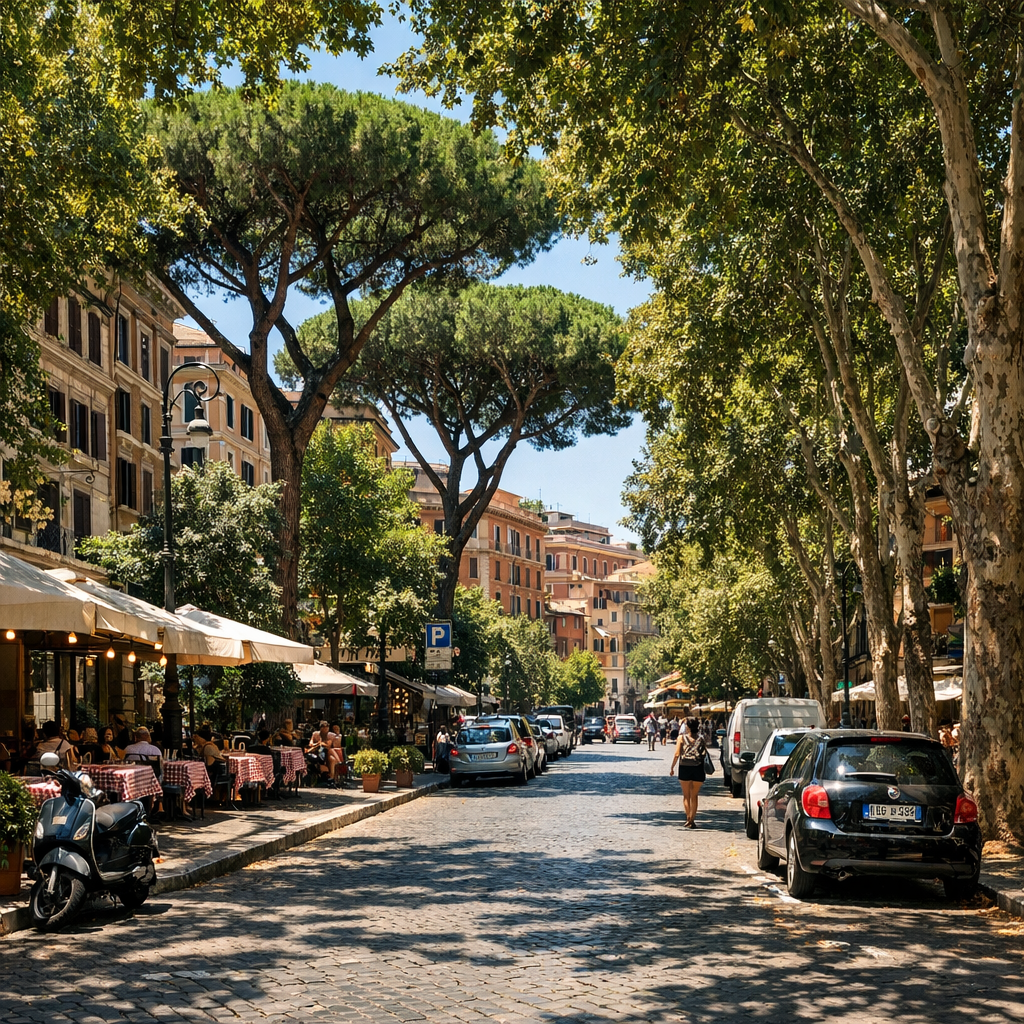
Rome’s heat is amplified in built-up areas where vegetation is sparse. Tropical nights and heatwaves impact neighbourhoods more strongly where trees and green cover are lacking. Meanwhile, the shoreline faces beach erosion and risks from rising seas. Coastal zones already see storm surges more often.
Why It Matters for Daily Life
These shifts aren’t academic. Higher overnight temperatures reduce rest, cooling demands spike in summer, and older or vulnerable residents suffer more during intense heat. Flooding becomes more sudden and destructive when heavy rain overwhelms older drains. And our coastline—both natural and built spaces—faces increasing stress. Local green spaces that absorb heat and promote comfort are under threat when they’re removed or neglected.
What Rome Can Do—and What You Can Do
- Protect and expand green cover: Trees, parks, and green corridors help mitigate heat islands and preserve quality of life.
- Support smart water management: Rainwater harvesting, reducing potable water losses, and designing stormwater systems for intense rain events.
- Stay informed during heat alerts: Watch for official warnings, limit exposure during peak hours, and prioritize hydration.
- Engage locally: Ask about climate adaptation projects in your neighbourhood. Support policies that aim for resilient infrastructure and coastline protection.
Rome’s climate is changing—slowly, but noticeably. Every degree, every shift in rain and green cover makes a difference. By staying aware and involved, we help ensure our city can adapt with elegance—and care.