

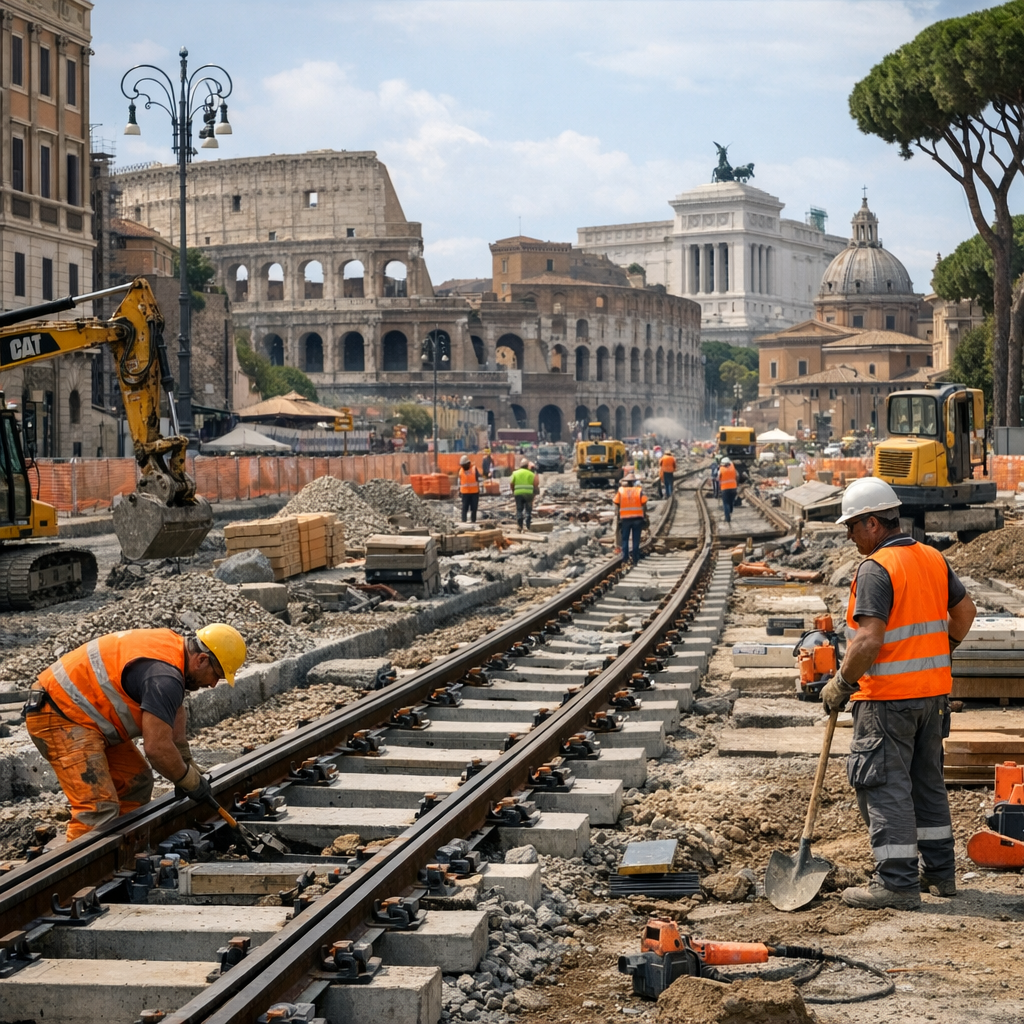
Rome is undergoing some of the most ambitious urban mobility transformations in recent memory. An €8 billion infrastructure push is driving major new tramways, extensions, and rail upgrades, aimed at improving connectivity and addressing long-standing gaps. As these initiatives unfold, they lift up hopes—and stir questions—for communities across the capital. I’m Francesca Ferrari, reporting from the heart of it all.
Key Projects in Motion
The Tranvia Palmiro Togliatti has moved into full construction. Stretching about 8 km and featuring 19 stations, it will connect eastern districts such as Ponte Mammolo and Subaugusta, bridging challenges in transit coverage for local residents. This work is funded through the national recovery plan (PNRR), with daily on-site activity estimated in the dozens of workers.
Another major transformation is in the rail network: the plan to close Rome’s northern railway ring, specifically the stretch between Valle Aurelia and Tiburtina, adding critical links to the Tyrrhenian line and Florence’s slow line. Once completed, expected in 2028, this will not only enhance passenger services but also create a bypass for freight traffic, easing congestion around the city.
Local Impacts and Community Concerns
For neighborhoods like Vigna Clara, Collina Fleming, and Tor di Quinto, the doubling of the rail line to Valle Aurelia has stirred debate. Residents are raising concerns about noise, proximity of new elevated tracks to homes, and transparency in environmental and safety evaluations. Citizen associations argue for more involvement in the design phase.
Smaller scale but personally felt: intersection safety and neighborhood transit. In Municipalities VII, VIII, IX, and XII, works have been launched to redesign dangerous intersections—Via Pietralata, Via Acqua Marcia, Via Cardinal Ginnasi among them—especially around school zones. The construction schedule has been structured to limit disruption, often aligning with school holidays.
What Residents Can Do and Expect
Engagement matters. Many projects are subject to public hearings, feasibility studies, and environmental impact assessments. Keeping an eye on notices from the Comune, Municipio offices, and urban mobility departments can help you stay involved.
Be ready for changes in daily routines. Road closures, bus reroutes, and noise disruptions are likely, particularly in construction-heavy areas. Plan travels early, monitor ATAC updates, and give yourself extra time.
Long-Term Vision and Challenges Ahead
These infrastructure projects aren’t just about mobility—they’re tied to broader goals of sustainability and urban equality. The city administration wants better access to housing, reduced commuting times, green transport corridors, and less reliance on cars. But there are hurdles: funding needs remain tight, modernizing infrastructure in a historic city involves complex approvals, and neighborhood pushback over noise, aesthetics, or safety is significant.
Rome’s growth is not only measured in steel and concrete, but also in citizen participation. As the city reshapes how people move, lives in many quarters will transform—not just their commutes, but their connection to public space, to safety, and to community.