

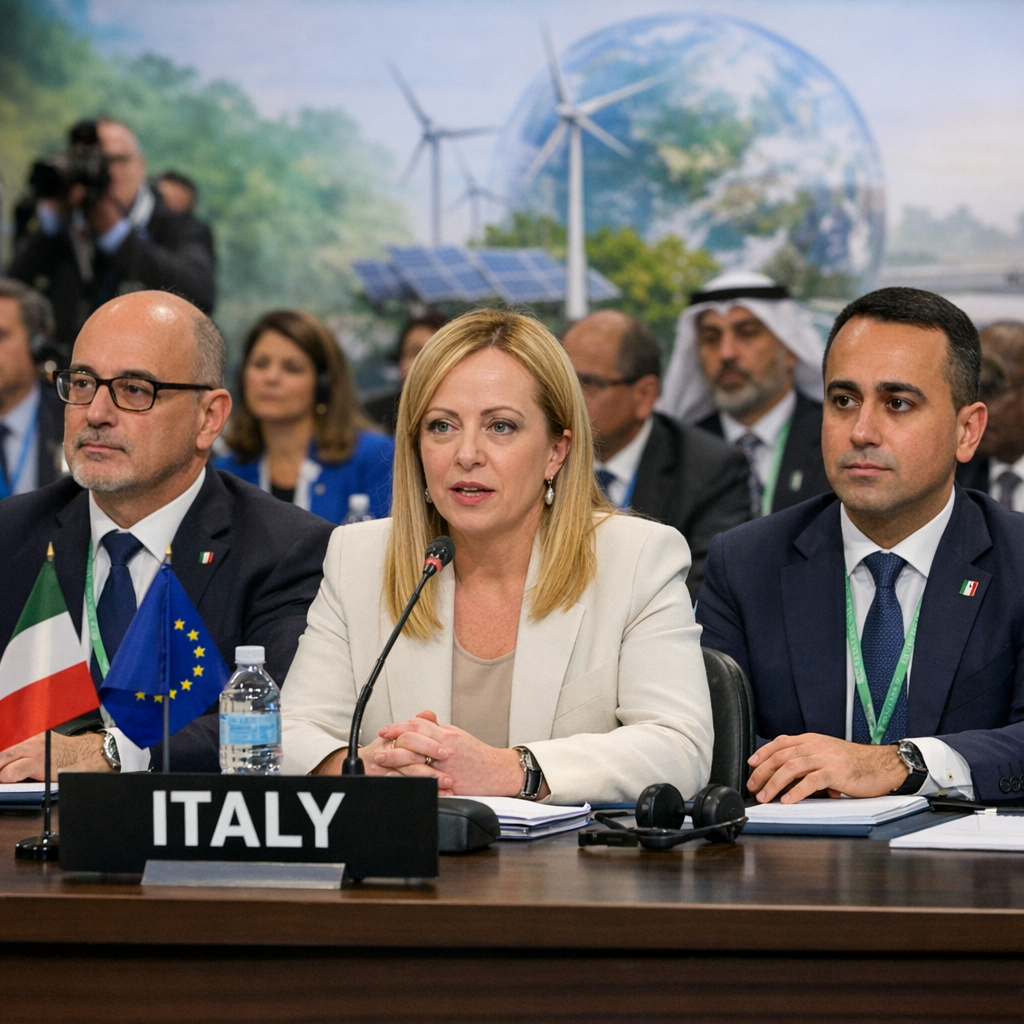
Italy has consistently demonstrated a strong commitment to addressing climate change on the global stage. As a member of the European Union, Italy aligns its policies with EU directives, aiming to achieve carbon neutrality by 2050. This ambitious goal is supported by a series of strategic plans and substantial financial investments.
Strategic Climate Policies
The National Energy and Climate Plan (NECP) serves as Italy’s primary framework for guiding the country’s transition towards a sustainable future. Initially adopted in 2019 and updated in 2024, the NECP outlines pathways to reduce greenhouse gas emissions and enhance energy efficiency. Complementing this, the Ecological Transition Plan sets a target to reduce emissions by 55% by 2030 relative to 1990 levels, with the ultimate aim of achieving climate neutrality by mid-century.
Financial Commitments
Italy has significantly increased its financial contributions to international climate initiatives. In 2024, the country allocated approximately €3.4 billion to climate finance, surpassing the targets set by the G20. This funding comprises €1.67 billion in public resources and €1.77 billion in private funds mobilized through public instruments. Key mechanisms include the Italian Climate Fund and the Mattei Plan for Africa, which focus on supporting developing countries in their ecological transitions.
International Collaboration
Italy actively participates in major international climate conferences, such as the United Nations Framework Convention on Climate Change (UNFCCC) Conferences of the Parties (COPs). At COP30 in Belém, Brazil, Italy co-promoted the “Belém 4X Pledge on Sustainable Fuels,” an initiative aimed at quadrupling the production of sustainable fuels by 2035 compared to 2024 levels. This commitment underscores Italy’s dedication to balancing energy transition with energy security, ensuring the well-being and competitiveness of global economies.
Challenges and Future Outlook
Despite these efforts, Italy faces challenges in meeting its updated 2030 obligations. While the country achieved a net emissions reduction of 34.8% from 2005 to 2023, greater than the EU average, further reductions are necessary to align with the Paris Agreement’s objectives. Continued investment in renewable energy, technological innovation, and international cooperation will be crucial for Italy to fulfill its climate commitments and contribute effectively to global climate action.