

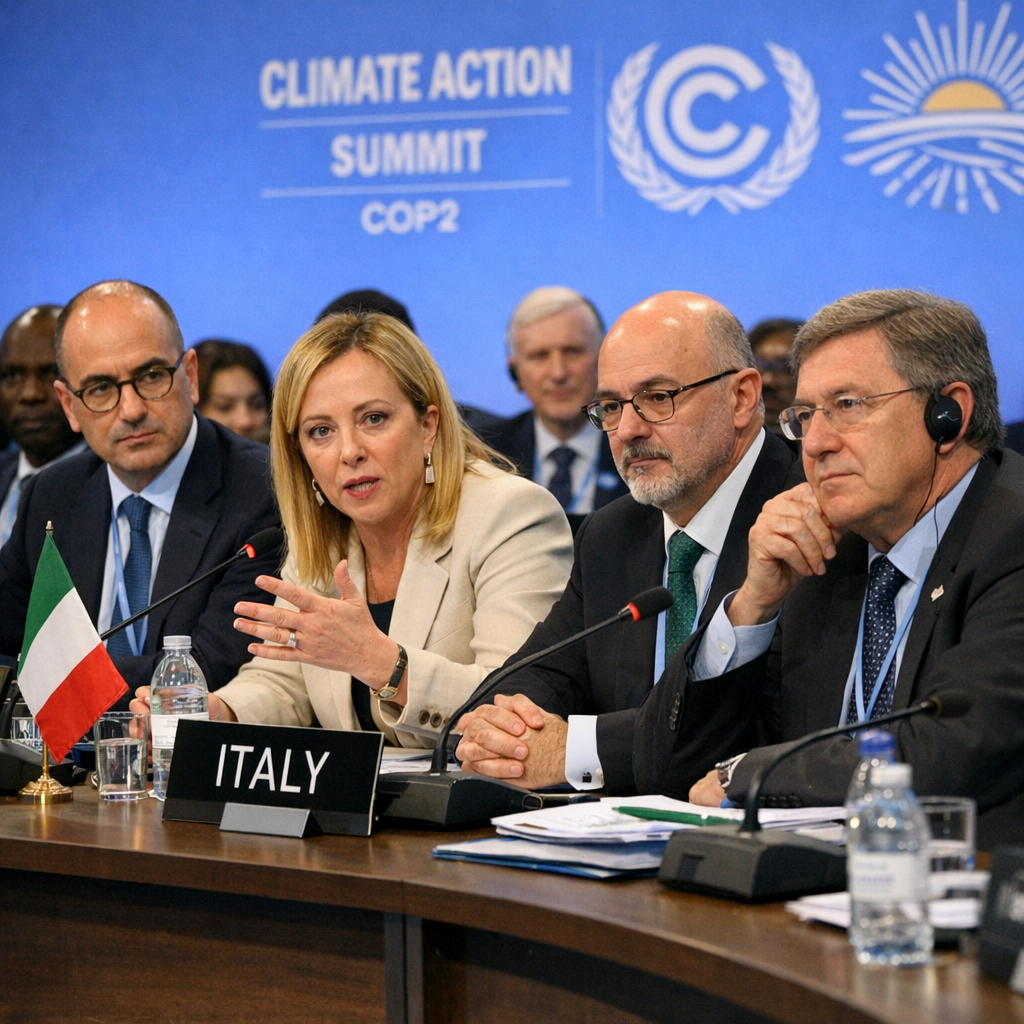
Italy has consistently demonstrated a strong commitment to addressing climate change on the global stage. Central to this effort is the National Energy and Climate Plan (NECP), which outlines the country’s strategy to achieve climate neutrality by 2050. The NECP sets ambitious targets, including a 55% reduction in greenhouse gas emissions by 2030 compared to 1990 levels, aligning with the European Union’s overarching climate objectives.
Financially, Italy has significantly increased its contributions to international climate finance. In 2024, the country allocated approximately €3.4 billion to support climate initiatives in developing nations, surpassing the G20 target. This funding comprises €1.67 billion in public resources and €1.77 billion in private funds mobilized through public instruments. Key mechanisms include the Italian Climate Fund and active participation in multilateral funds such as the Green Climate Fund and the Fund for Responding to Loss and Damage.
Italy’s climate diplomacy extends beyond financial contributions. The nation actively participates in international forums like the G7, G20, and the United Nations Framework Convention on Climate Change (UNFCCC). At COP30 in Belém, Brazil, Italy co-promoted the “Belém 4X Pledge on Sustainable Fuels,” an initiative aimed at quadrupling the production of sustainable fuels by 2035, starting from 2024 levels. This commitment underscores Italy’s dedication to balancing energy transition with energy security, ensuring both environmental protection and economic competitiveness.
Domestically, Italy has made notable progress in reducing greenhouse gas emissions. As of 2023, the country achieved a net emissions reduction of 34.8% from 2005 levels, surpassing the EU average reduction of 30.5% over the same period. Emissions from sectors under the EU Emissions Trading System (ETS) dropped by 54%, and the land use, land-use change, and forestry (LULUCF) sector has consistently acted as a carbon sink.
Despite these achievements, challenges remain. The Climate Change Performance Index 2026 ranked Italy 46th, citing a low rating in renewable energy and a very low rating in climate policy. Critics point to the NECP’s lack of an economy-wide target for reducing greenhouse gas emissions by 2030 and the country’s continued reliance on fossil fuels. Addressing these areas will be crucial for Italy to meet its long-term climate goals.
In summary, Italy’s proactive engagement in global climate initiatives, substantial financial commitments, and domestic policy efforts reflect a comprehensive approach to combating climate change. Continued focus on enhancing renewable energy adoption and refining climate policies will be essential for the nation to fulfill its commitments and contribute effectively to global climate action.