

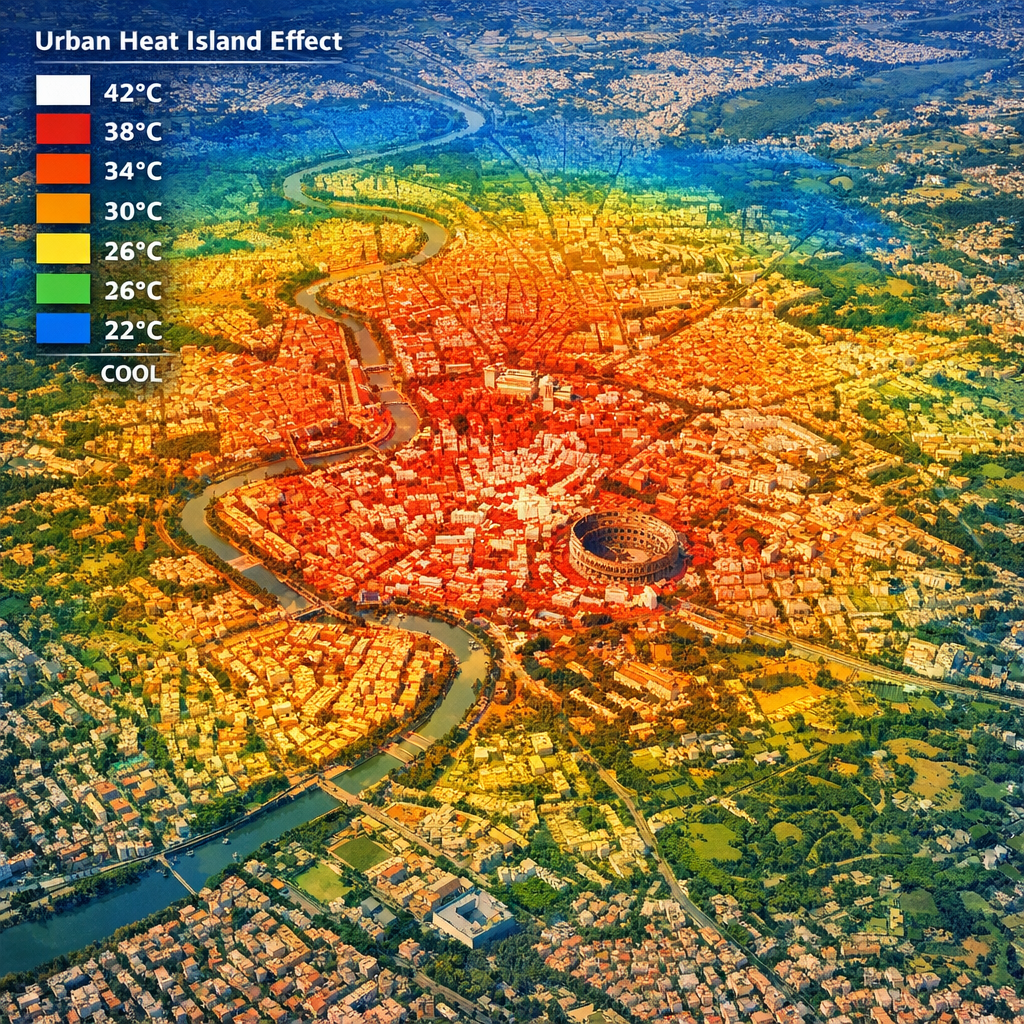
Rome, renowned for its rich history and architectural marvels, is facing a modern challenge: the Urban Heat Island (UHI) effect. This phenomenon results in urban areas experiencing higher temperatures than their rural surroundings, primarily due to human activities and urban development.
What is the Urban Heat Island Effect?
The UHI effect occurs when natural landscapes are replaced with dense concentrations of pavement, buildings, and other surfaces that absorb and retain heat. This leads to elevated temperatures in urban areas compared to adjacent rural zones. In Rome, studies have shown temperature differences of about 5.4°C during the day and over 4.5°C at night between urban and rural areas.
Impacts on Rome
The implications of the UHI effect in Rome are multifaceted:
- Increased Energy Consumption: Higher urban temperatures lead to a surge in cooling demands. Research indicates that the UHI intensity causes an increase in cooling demand up to 33% for urban areas compared to rural ones.
- Health Concerns: Elevated temperatures can exacerbate heat-related illnesses, especially among vulnerable populations such as the elderly and those with pre-existing health conditions.
- Environmental Degradation: The UHI effect can stress urban vegetation and contribute to deteriorating air quality.
Mitigation Strategies
Addressing the UHI effect requires a combination of urban planning and community engagement:
- Green Infrastructure: Incorporating green spaces, such as parks and green roofs, can help cool urban areas. The City of Rome has initiated projects focusing on the UHI effect, aiming to build a risk profile of the city and identify targeted solutions in vulnerable areas.
- Reflective Building Materials: Utilizing materials that reflect rather than absorb heat can reduce building temperatures and, consequently, the surrounding air temperature.
- Urban Planning: Designing streets and buildings to enhance airflow can help dissipate heat.
Community Involvement
Residents can play a pivotal role in mitigating the UHI effect by:
- Planting trees and maintaining green spaces.
- Using energy-efficient appliances to reduce heat emissions.
- Participating in community initiatives aimed at urban cooling.
By understanding and addressing the Urban Heat Island effect, Rome can work towards a cooler, healthier urban environment for all its inhabitants.