

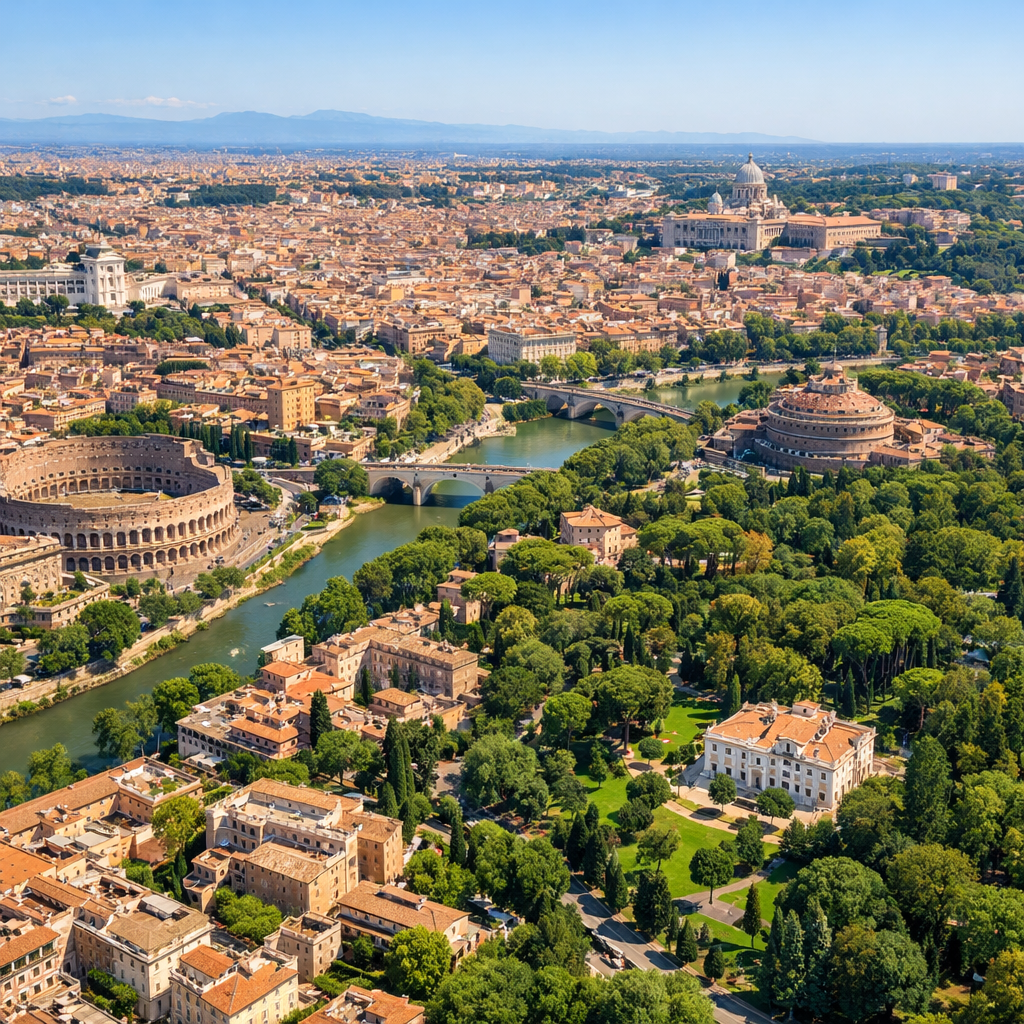
Rome’s unique blend of ancient architecture and modern development contributes to a phenomenon known as the Urban Heat Island (UHI) effect. This effect results in higher temperatures in urban areas compared to surrounding rural regions, impacting both the environment and residents’ well-being.
What is the Urban Heat Island Effect?
The UHI effect occurs when urban areas experience higher temperatures than their rural counterparts. This temperature difference arises from factors such as the extensive use of concrete and asphalt, which absorb and retain heat, and the limited presence of vegetation, which otherwise provides cooling through shade and evapotranspiration.
Impact on Rome
Studies have shown that Rome’s UHI effect can lead to temperature differences of up to 5.4°C during the day and over 4.5°C at night between urban and rural areas. This increase in temperature not only affects outdoor comfort but also leads to higher energy consumption for cooling buildings, thereby increasing greenhouse gas emissions. Additionally, the UHI effect can exacerbate health issues, particularly among vulnerable populations, by intensifying heatwaves and reducing air quality.
Mitigation Strategies
To combat the UHI effect, several strategies can be implemented:
- Green Infrastructure: Incorporating parks, green roofs, and urban forests can help cool the city by providing shade and enhancing evapotranspiration.
- Reflective Materials: Using materials with high reflectivity for roofs and pavements can reduce heat absorption.
- Urban Planning: Designing urban spaces to enhance natural ventilation can help dissipate heat.
Rome has initiated projects focusing on UHI mitigation. For instance, the ‘Climate Adaptation – The Urban Heat Island Effect in the City of Rome’ project aims to analyze UHI impacts and propose targeted solutions in vulnerable areas.
Community Involvement
Residents can also play a role in mitigating the UHI effect by:
- Planting trees and maintaining green spaces.
- Using energy-efficient appliances to reduce heat emissions.
- Advocating for sustainable urban development policies.
By understanding and addressing the UHI effect, Rome can enhance the quality of life for its residents and contribute to global efforts in combating climate change.